| |
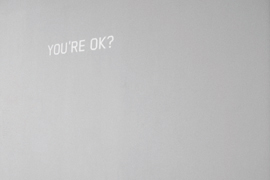
© Prologue (Ausstellungsansicht)
|
|
|
| WV-Nr. |
|
|
| Titel (title) |
|
|
| Technik (technique) |
| Videoinstallation, Diainstallation (video installation, dia installation) |
|
|
| Format (medium) |
| Video, Beta SP, PAL, 4:3, Farbe (colour), ohne Ton (silent), WV-Nr. 07-003) oder (or) Diaprojektion (dia projection) 40 Dias (slides), WV-Nr. 07-005 |
|
|
| Entstehungsjahr (year of production) |
|
|
| Entstehungsland (country of production) |
|
|
| Maße/Länge (size/length) |
|
|
| Mitwirkende/Partner (assistent/partners) |
|
|
| Unterstützt durch (supported by) |
|
|
| ------- |
|
|
| Auflage (Edition) |
|
| Preis (prise) |
|
| Signatur/Dating/Bezeichnung (signature/dating/designation) |
|
|
| Standort (location) |
|
|
| Besitz (courtesy) |
|
|
| ------- |
|
|
| Ausstellungen (exhibitions) |
| • Fresh Trips 2, medien.kunst.tirol & Kunstraum Innsbruck, Innsbruck, A 2007 • Looking inside. Interiors, The Centre of Art of the Museum of Mataró, Mataró, ES 2009 • Translation is a mode., Kunstraum NÖ, Wien/Vienna, A 2010 |
|
|
| Festivals (festivals) |
|
|
| Vertrieb (distribution) |
|
|
| Literaturnachweis (reviews) |
| Ajuntament de Materó, Institut Municipal d’Acció Culturale: mirrar endins interior 2008/2009, Temporada 2008-2009, Mataró 2009 |
|
|
| Schlagworte (keywords) |
|
|
| Lizenzvertrag/Archiv (licence contract/archive) |
|
|
| Verkauf/Vergabe 1 (selling/disposal 1) |
|
|
| Verkauf/Vergabe 2 (selling/disposal 2) |
|
|
| Verkauf/Vergabe 3 (selling/disposal 3) |
|
|
| Verkauf/Vergabe 4 (selling/disposal 4) |
|
|
| Verkauf/Vergabe 5 (selling/disposal 5) |
|
|
| ------- |
|
|
| Beschreibung - D (description german) |
| What’s the matter?
Nothing. Just looking at you.
You’re angry I left without a good-bye?
No, I was furious because I was sad.
Do you love me?
Yes, I love your eyes, I love your mouth, I love your knees, I love your ass, I love your hair, I love your hands.
So you love me completely?
Ein Dialog einer Beziehung, vielleicht sogar einer Liebe, mal zärtlich verspielte Sätze, mal beiläufige Kommentare an ein vertrautes „Gegenüber“ gerichtet, mal Anklänge von Eifersucht. Es gibt seltsame Verschiebungen im Gespräch. Bisweilen passen die Dialoge nicht so richtig zueinander. Gleichzeitig scheint manches vertraut, schon einmal irgendwo so gehört.
Das, was sich in Prologue als so etwas wie ein Gespräch darstellt, entfaltet sich allerdings ausschließlich über Texttafeln, über weiße Schrift auf schwarzem Grund. Wir hören keinen Ton, keine Stimmen der Sprechenden. Es gibt keinen akustischen oder visuellen Referenzraum neben der Typografie, der diese Dialoge definieren könnte.
Die Sätze sind sozusagen Fundstücke, Gesprächsteile, die Annja Krautgasser einer Reihe von Filmklassikern, allen voran Filmen von Godard oder Antonioni, entnommen, ins Englische übertragen und dann zu einer „fiktiven“ Gesprächscollage geordnet hat. Wobei sich ihre Auswahl auf solche Passagen konzentrierte, in denen die Protagonisten gerade nebeneinanderher gingen, sich also in Bewegung befanden, einen Raum durchmaßen. Genau dieser für die Auswahl der Textstellen entscheidende Aspekt wird freilich in der auf Schrift reduzierten Form von Prologue zur Gänze ausgeblendet.
Nicht nur die Neumontage der Gespräche in den Texttafeln, vor allem das Fehlen eines fotografischen bzw. filmischen Bezugsraumes, schafft dabei jene Leerstellen, die für die Irritationen verantwortlich sind. Durch die Verweigerung des dazugehörenden filmischen Bildes scheinen die Gespräche weniger einem kinematografischen Script entnommen, sondern vielmehr der räumlich isolierten literarischen Welt eines virtuellen Chatrooms.
(Gerald Weber) |
|
|
| Beschreibung - E (description english) |
| What’s the matter?
Nothing. Just looking at you.
You’re angry I left without a good-bye?
No, I was furious because I was sad.
Do you love me?
Yes, I love your eyes, I love your mouth, I love your knees, I love your ass, I love your hair, I love your hands.
So you love me completely?
A dialogue from a relationship, perhaps even a love affair, sometimes tenderly playful sentences, sometimes incidental comments aimed at a trusted “partner,” sometimes with overtones of jealousy. There are strange shifts in the speech. Occasionally, the utterances do not fit one another properly. At the same time some things sound familiar, as if they had already been heard somewhere.
What appears to represent something approaching a conversation in Prologue later unfolds solely on boards of text in white lettering on a black background. There are no sounds to be heard, no speakers’ voices. There is no acoustic or visual space of reference to define this dialogue beyond its typographical representation.
The sentences are “found footage,” so to speak, elements of dialogue that Annja Krautgasser has taken from a series of classic films, especially films by Godard or Antonioni, transferred into English and then arranged in a “fictive” spoken collage. Her selection concentrates on passages where the original protagonists were walking alongside one another, i.e. were moving, crossing a room. Precisely this decisive aspect of the excerpted text is entirely blended out in Prologue, which is reduced to only the language.
Not only is it this new montage of the dialogues in boards of text that creates the gaps responsible for the irritation, it is primarily the lack of a photographic or filmic point of reference.
Leaving out the appropriate images makes the dialogues less apparently taken from film scripts, as if taken from the isolated text-based world of the online (virtual) chatroom.
(Gerald Weber) |
|
|
)